Contributors

Monday, November 24, 2014

My new Carbon-Free Toy

Last week I took delivery of the 1st Lightning Motorcycle LS-218 superbike, an all electric motorcycle that also happens to be the world's fastest production motorcycle (218 MPH top speed).  See article, pics, video links below:


motorcyclistonline: electric-news-lightning-motorcycles-delivers-its-first-production-bike

lightning-motorcycles-sells-ls-218-electric-superbike-to-first-customer

www.youtube.com/watch?v=29aQXRrROhU


I'm excited to be supporting another San Francisco Bay Area technology company that is helping to save and change the world with amazing tech that takes money out of the hands of fossil fuel cavemen and puts it into the hands of clean tech and clean electric utility companies.

Thursday, September 11, 2014

Major milestone achieved for Pristine Sun - we closed our largest senior project finance loan to date ($24 Million) on a portfolio of our small utility-scale solar power plants!  I got so excited I had to do back flips (technically a round-off backhandspring, as at 46 I'm not sure I should try a backflip if I want to walk tomorrow).  See YouTube video here:


https://www.youtube.com/watch?v=xodRSqsIn3Y&feature=youtu.be 

Thursday, June 5, 2014

Some of my solar power plants in California

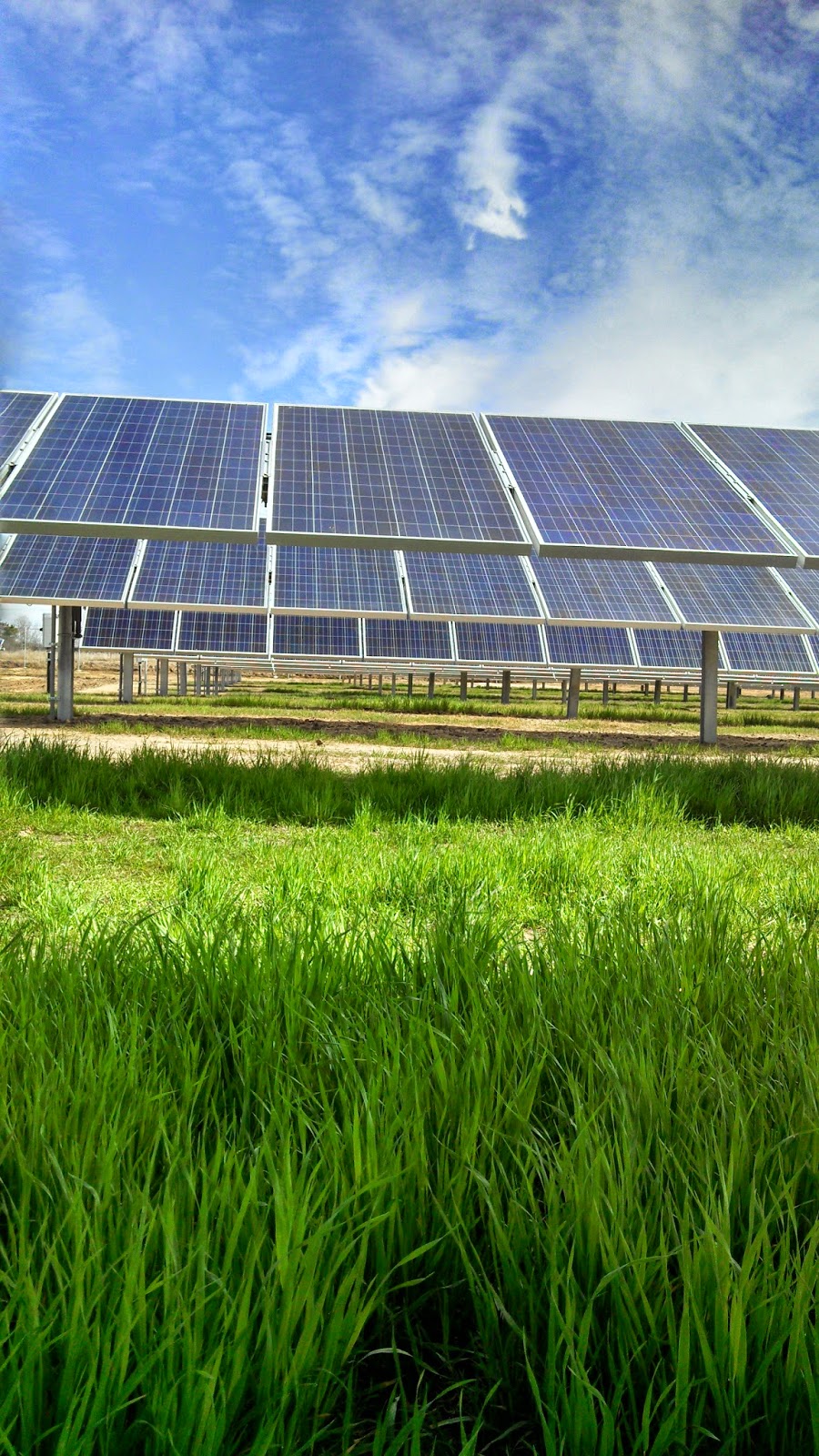
These are some of my favorite pictures of small utility-scale community solar power plants that my company Pristine Sun developed, built, owns & operates in California:

Stroing project in Red Bluff CA:

Rogers project in Gerber CA:

Helton project in Merced CA:


How to Refute Carbon Reduction Naysayers (including discussions about the EPA Clean Power Plan)

When I wrote The Clean Power Revolution in 2014, I had no idea that we would see such rapid price reductions in solar energy.  I was quite confident that wind energy would become more competitive than coal & nuclear (it has) and that massive new transmission lines would be constructed to support wind energy growth (they were).  But to see the amazing growth of solar (both utility-scale solar power plants and rooftop behind-the-meter) and energy storage due to their mind-boggling cost reductions is gloriously surprising (did I just say that?).
Wholesale energy prices tell the story – not opinions, rhetoric or political tendencies.  In doing a quick review of comments above, it appears most of you are not (or have not been) actively employed in the wholesale utility energy industry.  Bottom line: coal and nuclear, even with their billions of dollars of federal subsidies, cannot compete with UN-subsidized wind and solar energy.
Wholesale energy prices in ERCOT (Texas), WECC (the entire western grid from Colorado west to California), MISO (upper Midwest), SPP (Great Plains), PJM (Northeast) and most of the Southeast generally range from 3.7  to 8 cents per kWh.  Wind energy is profitable at 3 cents (without PTC) and at 2 cents with the PTC (which simply levels the playing field with the massive subsidies (direct and indirect) with fossils & nuclear).  That’s well below average energy pricing today, which includes hundreds of decades-old fossil plants that are fully paid for and only have fuel and maintenance costs (O&M).  Daytime wholesale (peak) pricing is generally about 40-90% higher than 24/7 pricing, which pushes wholesale trading energy prices to 5-10 cents per kWh.  This includes ALL forms of generation such as cheap hydro-electric (which is now becoming an intermittent resource due to more common droughts thanks to climate change) and really old (but inefficient) coal plants.  Utility-scale solar energy at 5 cents/ kWh for peak pricing (which I didn’t even write about in my book 10 years ago due to its high cost back then) is surprisingly now cheaper than ANY form of new generation (coal or gas) except wind).  And onshore wind usually doesn't have strong production during peak hours.  In Texas, the largest energy consuming state in the USA with some of the cheapest fossil fuel energy resources, solar beat – on price alone – coal, wind, natural gas and nuclear for the municipal utility for the city of Austin, and has done so for others.  Austin is paying about 7 cents for daytime energy now (mostly coal & gas).  I never would have thought I’d see 5 cent / kWh solar a few years ago, but here we are.  Unsubsidized solar today is about 7 cents per kWh, which is still on par with fossil fuel prices.  Solar costs are dropping (as are wind's), while fossil fuel costs inevitably rise. So who do you think will win this game, when solar & wind already beat coal, nuclear and gas on price?
I used to own stock in several fossil fuel companies, but have sold it all because as an energy insider, I see the writing on the wall: coal and nuclear cannot compete with wind & solar regardless of what the federal policies are.  Carbon costs or not, pollution controls or not, subsidies (for both fossil and renewables or even only for fossil fuels) will not affect the inevitable demise of the coal & nuclear industry in the USA.
With respect to intermittency being a major problem, that is a MYTH.  The utility industry has more than a century of practice managing wild swings in intermittent demand on the load side and has gotten quite proficient at it.  Adding intermittency to the supply (generation) side is a non-issue until you get to over 40-60% of the fleet of generation assets according to dozens of peer-reviewed studies by the utility industry itself, governments (USA Federal & state), universities, private industry groups, etc.  Furthermore, there are currently over a dozen states that have >10% of their energy coming from wind (and a few at >20%) including Texas and Iowa, and there have been no problems with unreliability due to intermittency.  In fact, during the recent climate-change induced Polar Vortex, wind energy saved the ERCOT grid in Texas when too many power plants went down, and wind & solar saved the grid in PJM in the Northeast when their plants went offline due to extreme cold.  So my fellow Americans, don’t listen to fear-merchants that would have you believe prices will go up (they’re going down in Germany and in the USA as a direct result of renewable energy due to no fuel costs) or that the grid will fail.  It’s nonsense and is damaging to America to claim such lies are true.  Yes, naysayers, you are not being patriotic when you’re spreading lies and half-truths; stick to the facts.
I have been in the utility energy industry since 1998, and have 1st hand experience with fossil fuel plants and renewable plants in various parts of the USA, including energy trading; power plant design, construction, ownership & operation; and distributed generation of multiple types (natural gas, hydrogen, wind, solar, energy efficiency upgrades including boilers and HVAC and energy storage).  Note: the EIA and others do not have current energy data (from 2013 & 2014) and therefore renewable cost gains in the last 18 months are completely ignored in their forecasts & reports.

Monday, January 6, 2014

2013 Solar Installations

Now is the time of year to reflect on past accomplishments and set goals for the new year.  Without further ado:

2013 solar installations by my company were nearly 26 MW, which is enough to power 5,200 homes.  This supports a pretty remarkable growth trajectory of solar installation success since Pristine Sun's inception in 2009 (see chart below).  Most of these installations were in California (for utility-scale solar power plants) and New York (for rooftop projects). Note that my company owns interests in all of these projects installed in 2013.

656% CAGR (Compound Annual Growth Rate)

For 2014, a lot depends on the amount of permanent financing we can obtain and how quickly we get it lined up, as well as how quickly we realize a solution for our temporary security deposits required by utilities for interconnection costs.  By my best estimates, we'll start construction on 20-45 MW of utility-scale solar projects, a 20 MW wind project, and up to another 10-20 MW of commercial & industrial BTM (Behind The Meter) solar projects.

Note: solar power plants in California can now compete head to head with cheap shale natural gas and all other forms of energy generation (it has reached grid parity).  Solar on rooftops can compete with grid pricing in many regions of the country (especially those with utility time-of-day pricing, higher than average retail electric rates, and/or reasonably good solar insolation).

Sunday, October 20, 2013

Replace Congress with Online Voting

Replace Congress with Online Voting

Over 230+ years ago in 1776 when Congress was conceived and created, there was no Internet, TV, or Radio. There weren't even any telephones or telegraph (that came nearly two decades later).  The only way to be represented was to elect a local person you trusted and send them packing to Washington DC, hoping that your needs & interests would be ethically and fairly argued for.

Today, Congress no longer works for the people, nor do they represent our interests.  Instead, they represent the highest and/or most aggressive special interests & lobbyists.  They are so far out of touch with reality that they routinely ignore the needs of their constituents and don't even realize they're doing it.  Congress is so broken that the system is now useless and irreparable in my opinion.  Influenced almost solely by well-organized and powerful lobbyists, special interests (Big Pharma being the most powerful, followed by Big Oil, Big Coal and Big Ag) they are passing laws that:

  1. refuse to reform the tax code and take the necessary steps to eliminate the federal deficit,
  2. poison our bodies with processed foods and often useless & unnecessary drugs, 
  3. poison our water & air with toxic emissions and waste from burning fossil fuels and nuclear energy that are (as of 2013) surprisingly more expensive than renewable energy in 75% of the country, and
  4. choke entrepreneurs with unnecessary and cumbersome laws.

So I recommend that we throw them all out altogether and move towards a modern-day society that is governed by the Executive Branch (the President and his/her administration), the Judicial Branch (our courts) and shift the responsibilities of the Legislative Branch (formerly Congress) - passing laws - directly to the people.  How?

Here are some ideas, and I welcome others to contribute to this concept to make it more elegant, but keep it simple (not always easy to do both, huh?).

  1. Put this plan directly on the ballot in 2014 in every state as a voter referendum to bypass resistance from Congress and state legislatures (this process would require a lot of people working to get the required signatures).
  2. Every citizen in the nation would be able to register to vote online and be given a unique voter ID registration number that would be tied to their email address and mobile phone.  Poor or elderly people without email addresses or mobile phones would be given a free email (in the manner of Gmail and Hotmail) by the Federal Voter Database, which could be utilized on any computer or tablet (such as at any public library, hospital, nursing home, hotel, etc.).
  3. Elect one (1) Federal Senator per state to oversee the integrity of a new Online Voting system, speak about the results of their state's votes in televised sessions on C-SPAN, and prevent fraud within the system.
  4. Federal Senators would live in each state Capital.  Preventing the Federal Senator's residence in Washington DC would reduce influence "within the beltway" of DC by the special interests.  
  5. Set up an Online Voting system managed in Washington DC by a non-partisan group from the NSA or Homeland Security, using their best IT technicians and anti-hacking teams to ensure integrity.  This should not take an army of people, as technology for online voting these days is rudimentary.  The effort will be solely on certifying voters as real people and preventing fraud, hacking, and duplicate votes.
  6. Each state would gather and organize any nominated issues desired by its population, and submit these issues for new laws or changes in existing law to the state legislature (which may also be eliminated and replaced by a state-level Online Voting system if desired).  The issues receiving the most votes (by a majority or super-majority) would be submitted to the Federal Senator's office.
  7. Once per quarter, each Federal Senator would submit their state's issues to the Federal Legislative Database (the "Database").  The Database would combine similar issues from multiple states into a single consolidated issue and add those to the Popular Issue List, and separate each distinct issue into a Discreet Issue List.  The Database would then automatically send out emails to a random group of Registered Voters asking them to vote on whether the Discreet Issue List is important to them.  Any issues on the Discreet Issue List that receive more than 50% approval (or 66% approval for any issues that would increase taxes or government spending) will be added to the National Issue List along with each of the Popular Issue List issues.
  8. Once per quarter, every registered voter in the nation would be invited, via email or text message, to vote on the issues contained in the National Issue List. Issues that would increase taxes or increase federal spending (outside of a pre-approved 1% annual inflation increase) would require a super-majority of at least 66% approval in the National Vote.  Any other issues, including those that would decrease taxes, receiving votes of more than 50% would be passed as laws and implemented / enforced by the Executive Branch (the President's administration) after a mandatory review  of no more than 60 days by the Judicial Branch as to its lawfulness.
  9. Fire every existing Senator and Representative, effective January 2017 at the end of the Lame Duck period after the new Federal Senators are elected in 2016.  Who-hoo!
  10. Finally, a government for the people, by the people.
I welcome your feedback, and would love to hear from some volunteers who would like to take this on and lead this effort.

Tuesday, August 6, 2013


Construction of the largest portfolio of small utility-scale solar Feed In Tariff projects in California reaches 50% completion!

15 solar PV projects are under construction, stretching from San Luis Obispo (just north of Santa Barbara) north to Shasta County.  These projects total just under 14 MW and are enough to power 2,800 typical homes (at 5 kW per home).  See some pictures below:
Red Bluff CA
Gerber, CA

Yuba County CA
Tehama County, CA
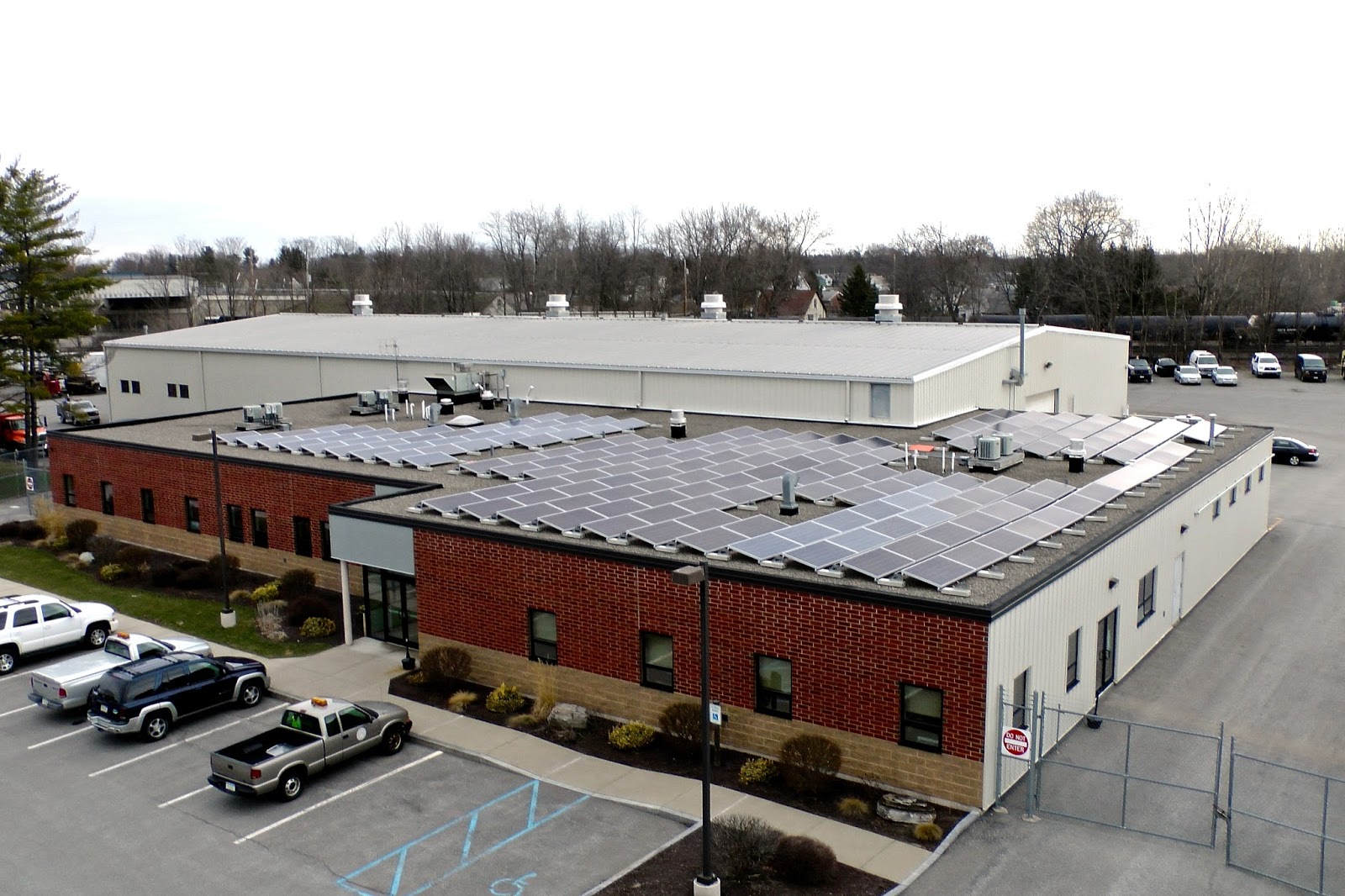
 We are also building to own & operate, with our partner Monolith Solar, a portfolio of 11 MW of rooftop commercial solar projects in upstate New York (see pictures below), which is enough for another 2,200 homes.  This brings our total projects under construction in 2013 equivalent to offsetting the needs of 5,000 homes.  There are many small cities & towns across America that have 5,000 or fewer residents, so it kinda feels like we're building enough to power a small city this year.  Wow, this is a fulfilling career.  Stay tuned!